京都の結界と鬼の秘密
Beyond Kyoto’s stunning temples and gardens lies a “spiritual defense system” that has operated for over 1,200 years. Why did this city require such elaborate mystical protection? Based on our recent workshop, let’s dive into the deep waters of Kyoto’s hidden history and the “dots” that connect its sacred sites.
1. The Visionary Architect
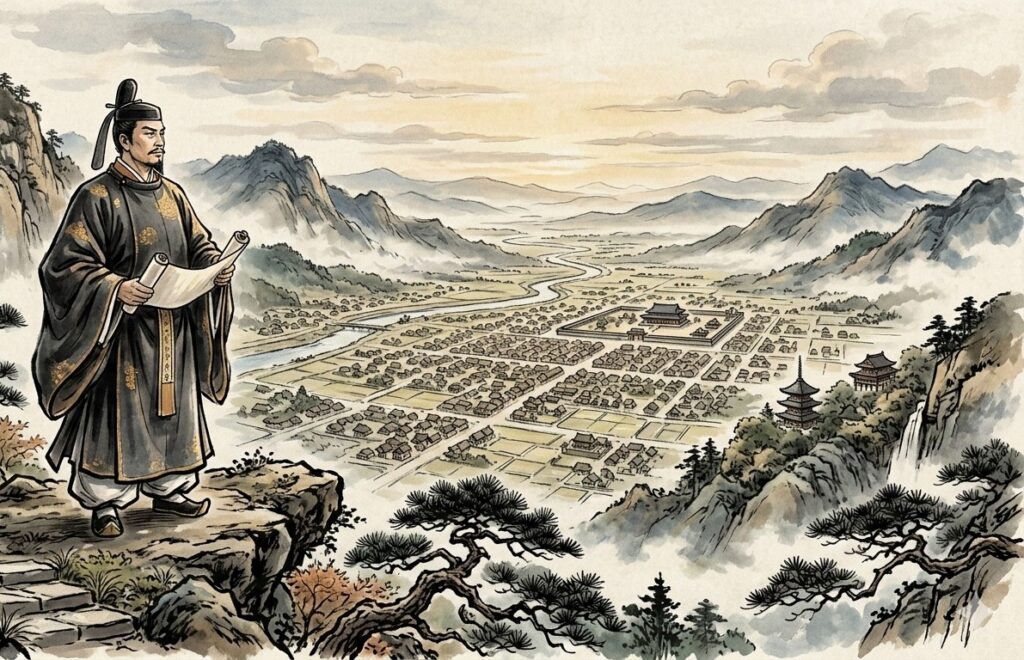
Wake no Kiyomaro’s DeterminationThe birth of Kyoto (Heian-kyo) was driven by the iron will of one man: Wake no Kiyomaro. At the time, the old capital in Nara was paralyzed by the political interference of powerful Buddhist factions.Kiyomaro sought a pristine land to forge a new era. He set his sights on the basin of Yamashiro, surrounded by protective mountains and pure rivers. He wasn’t just a government official; he was an “urban producer” who believed that the flow of nature’s energy (Feng Shui) determined the destiny of a nation. His passion for this basin laid the foundation for the world’s most sophisticated “barrier city.”
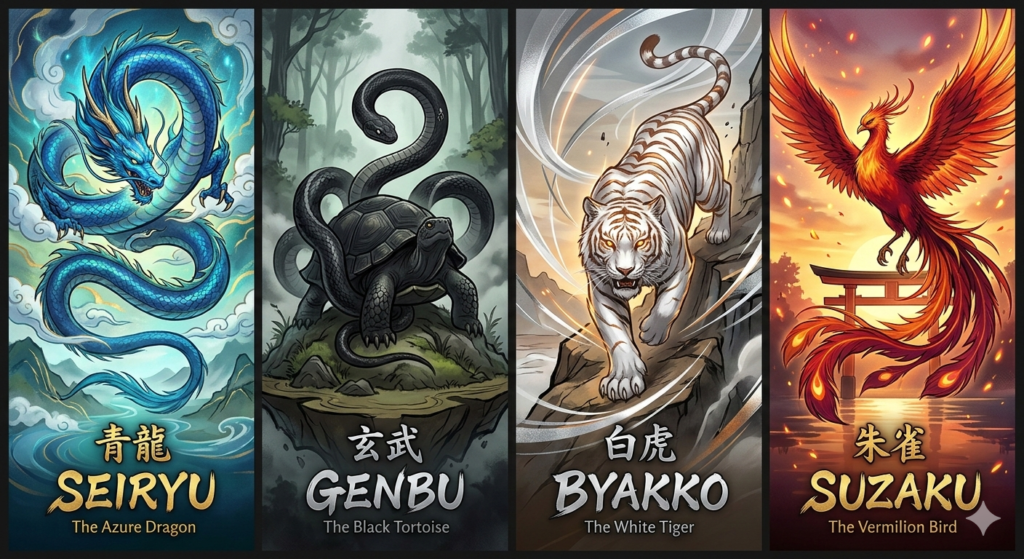
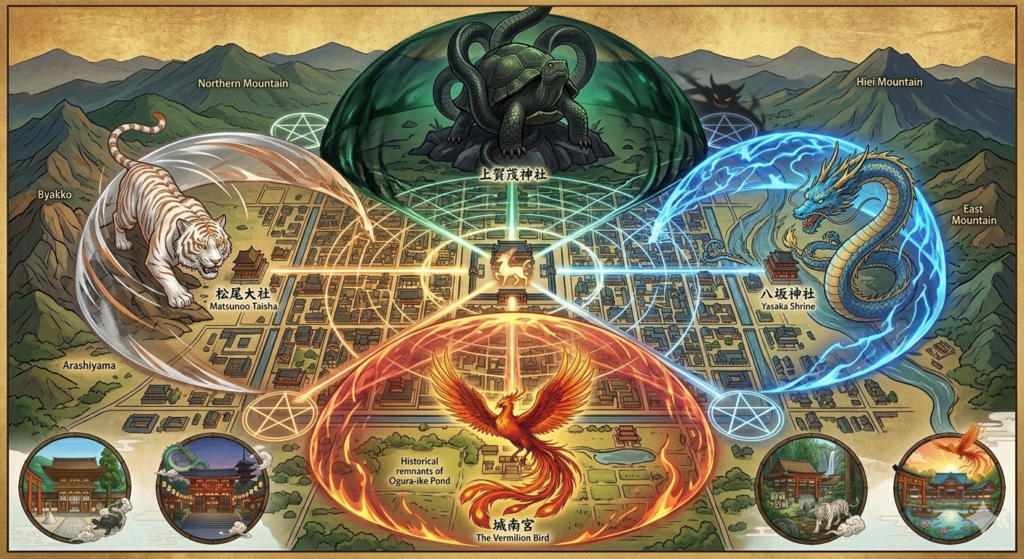
2. The Four Guardians and the Shifting SouthTo lock the city’s energy in place, four mythical beasts were assigned to the cardinal directions, each with a distinct personality
North: Genbu(The Black Tortoise & Serpent)
Guards against the harsh northern winds, granting longevity and wisdom (Kamigamo Shrine).
East: Seiryu (The Azure Dragon)
A symbol of life and vitality, governing the Kamo River to bring success and prosperity (Yasaka Shrine).
West: Byakko (The White Tiger)
A powerful protector of the roads, keeping calamity at bay (Matsunoo Taisha).
South: Suzaku (The Vermilion Bird)
A majestic firebird representing light and summer.Here is where a fascinating historical “dot” connects: Originally, the south was protected by the vast Ogura-ike Pond, where the water mirrored the spirit of the Suzaku. However, when the pond was reclaimed for land in modern times, Jonangu Shrine—a vital hub for transportation—took over the crucial role of guarding the city’s southern gate.
3. Masters of the Dark
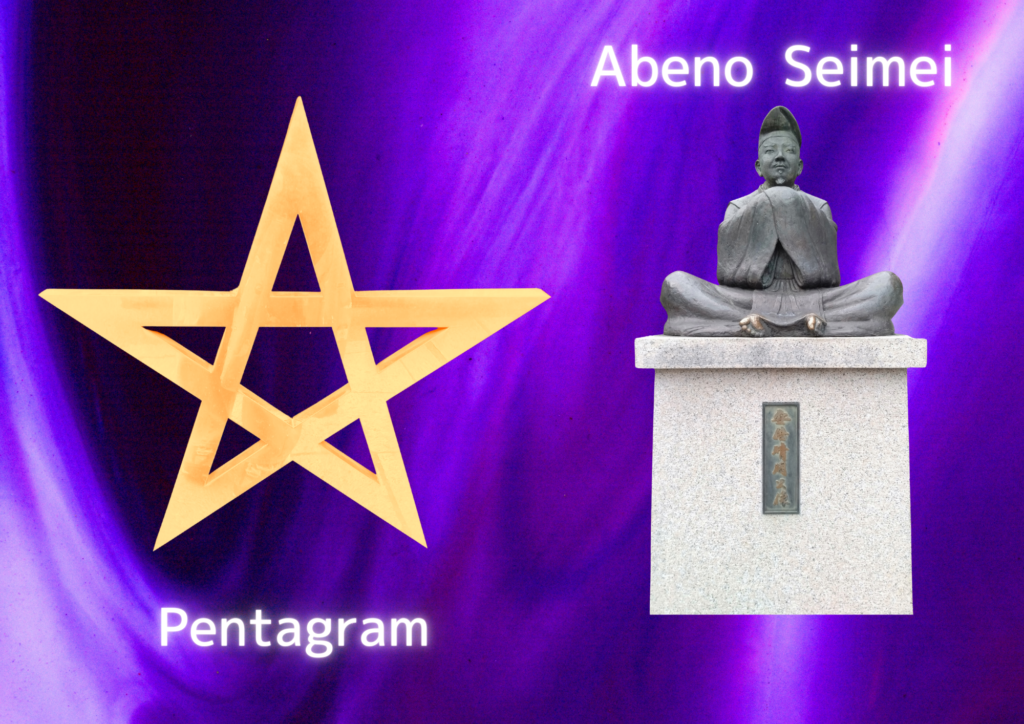
Abe no Seimei and the Pentagram SealThe four guardians alone weren’t enough to hold back the “darkness” of ancient Kyoto. Enter the legendary sorcerer (Onmyoji), Abe no Seimei.His iconic symbol, the Seimei-kikyo (Pentagram), represents the five elements: Wood, Fire, Earth, Metal, and Water. This “one-stroke” star was a spiritual trap—designed so that evil could never enter, and once caught, could never leave. By adding the Kirin (The Golden Dragon) at the center of the grid, with Heian Jingu Shrine as its symbolic heart, the spiritual barrier reached its ultimate strength.
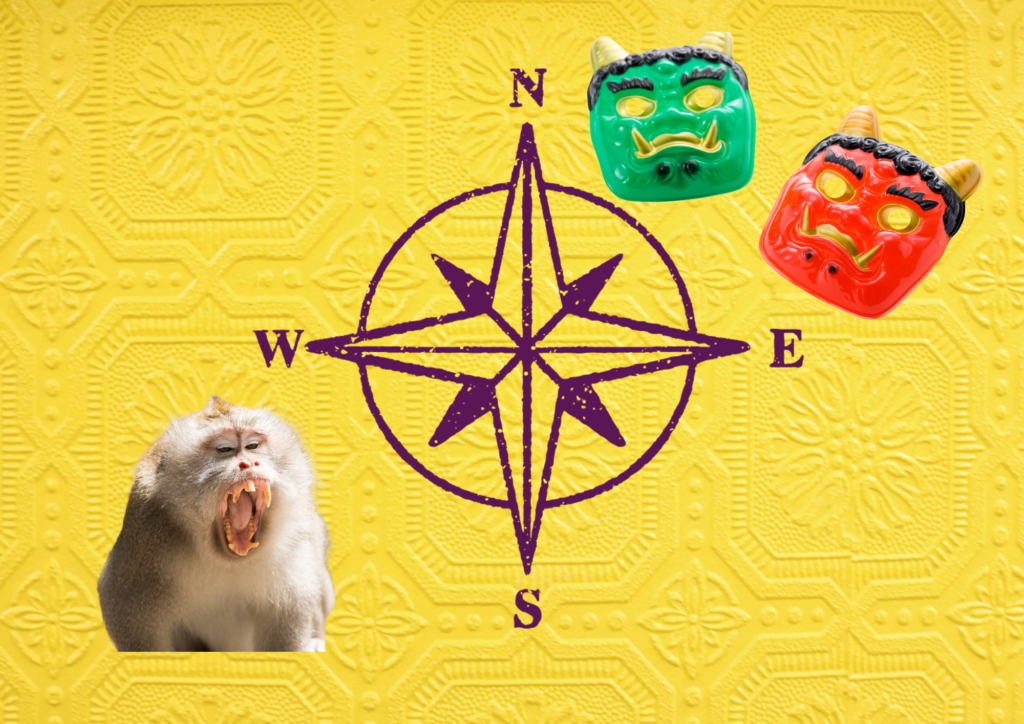
4. The Visuals of the “Oni” and the Guardian MonkeyWhat exactly were these “Oni” (demons) that the barriers were meant to stop?
Interestingly, the visual appearance of an Oni—horns on the head and wearing tiger-skin loincloths—comes directly from the compass. The “Demon Gate” (Kimon) is located in the Northeast, the direction of the Ox (Ushi) and the Tiger (Tora) in the Chinese Zodiac. Thus, demons were depicted with the horns of an ox and the fur of a tiger.To counter this, the Monkey (Saru) was recruited. Because the Monkey sits exactly opposite the Demon Gate on the zodiac clock (Southwest), it became the “anti-demon” guardian. Even today, at the Northeast corner of the Imperial Palace (known as Sarugatsuji), you can find a wooden monkey carving watching the night, ensuring that evil “passes away” (a play on the Japanese word Saru, which means both “monkey” and “to leave”).
5. The Destiny of the Basin
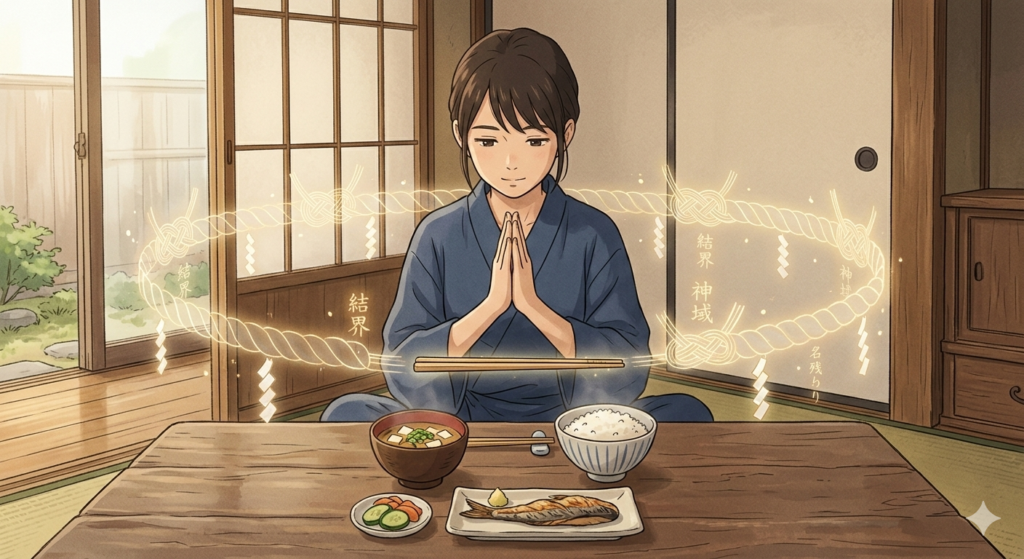
Why the “Kekkai” Were NecessaryLooking back at the geography, I believe the reason for these barriers was rooted in the nature of a “basin.” Enclosed by mountains, Kyoto can feel stagnant; the air is heavy, and in ancient times, the fear of plagues and floods weighed on the soul.In such a confined environment, these barriers provided “Spiritual Security.” By telling the citizens, “You are safe within these invisible walls, protected by gods and beasts,” the leaders calmed the hearts of the people. Wake no Kiyomaro’s map wasn’t just urban planning—it was an “infrastructure of the heart.”Conclusion: When the Dots Become a LineThe joy of studying history is the moment when scattered shrines and legends suddenly connect into a single “line.” Even in modern Kyoto, these “mini-barriers” live on—in the salt placed at doorways or the charms found in family homes.When you next visit Kyoto, don’t just look at the shrines. Look for the invisible lines that connect them. You will see the traces of a 1,000-year-old prayer for peace
Thank you for reading.
This content is edited based on the workshop held by Nanahaya on February 28.